Research Projects
 |
| GASA |
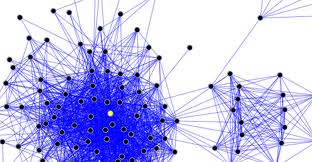
| Large-scale, graph-parallel computation is central to a wide array of applications ranging from data mining, through machine learning to natural language processing. In this project, we are designing a new highly scalable Graph-Aware Storage and Analytics (GASA) system, which can efficiently and effectively run on thousands of machines. On the storage layer side, we are devising a new graph-oriented distributed file system. On the analytics side, we are developing a distributed analytics engine with a best-of-breed graph-parallel abstraction at each cluster/cloud node. [Under Composition] |
|
 |
| DREAM |
The Resource Description Framework (RDF) and SPARQL query language are gaining widespread momentum and acceptance among various fields including science, bioinformatics, business intelligence and social networks, to mention a few. In this project, we are developing a novel Distributed RDF Engine with Adaptive query planner and Minimal communication (DREAM). The main goal of DREAM is to preclude data communication, while exploiting maximum parallelism. It seeks to achieve this goal via: (1) adopting a new paradigm of RDF systems, wherein all the advantages of the centralized and distributed RDF systems are combined and their disadvantages are avoided, and (2) exhibiting a polymorphic behavior, whereby its engine executes as either centralized or distributed (with various numbers of machines), depending on the complexities of the given SPARQL queries. [VLDB 2015] |
|
 |
| Hadoop MapReduce |
| Hadoop MapReduce is a pervasive analytics engine for Big Data and is highly recognized for its elasticity, scalability and fault-tolerance. In this project, we are working on improving Hadoop network traffic and performance from two perspectives, systems and applications perspectives. On the systems side, we are modifying the Hadoop MapReduce code in order to incorporate new locality- and skew-aware scheduling algorithms. On the applications side, we are characterizing Hadoop performance (which does not require modifying Hadoop code) with various image processing, machine learning and text analytics applications so as to judiciously and synergistically guide Hadoop configuration on the cloud, and, accordingly, improve overall performance. [IEEE CloudCom 2011, IEEE CLOUD 2012, IEEE CLOUD 2013, Two Book Chapters on Virtualization and Analytics Engines for the Cloud with CRC Press] |
|
 |
| Cloud Monitoring |
Deploying performance-sensitive applications on the cloud is cumbersome due to the complexity of the cloud execution environment. Routine tasks such as monitoring, performance analysis and debugging often require close interaction and inspection of multiple layers within the cloud software infrastructure. In this project, we are designing and implementing user-oriented monitoring tools, which help integrate critical metrics into cloud layers and, accordingly, allow for flexible visualization and analysis. [IEEE CloudCom 2011] |
|
 |
| CMP Cache Management |
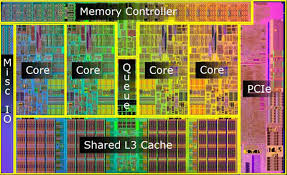
As large uniprocessors are no longer scaling in performance, Chip Multiprocessors (CMPs) have become the trend in computer architecture. CMPs can easily spread multiple threads of execution across various cores. Besides, CMPs scale across generations of silicon process simply by stamping down copies of the hard-to-design cores on successive chip generations. A key requirement to obtaining high performance from CMPs is to effectively manage the limited on-chip cache resources. In this project, we are: (1) designing a general framework for approaching cache management in CMPs, and (2) exploring novel CMP cache designs, which effectively employ our general framework and efficiently achieve scalable performance. [HiPEAC 2009, ICS 2009, CAL 2010, PhD Dissertation 2010, PACT 2010, HiPEAC 2011, JPDC 2011, A Book Chapter on Balancing Last Level Caches with CRC Press] |
|
 |
| High-Performance Memory Substrates for Search-Intensive Applications |
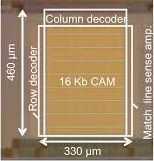
Search operations can occupy a significant portion of total execution time and energy consumption, while posing difficult performance problems upon using traditional memory hierarchy concepts. In this project, we are extending the conventional content addressable memory (CAM) to accelerate search operations present in various popular real-world applications (e.g., IP address lookup in core routers and trigram lookup in large speech recognition systems). [ISPASS 2007] |
|
 |
| Power-Aware Memory Management using Software Generated Hints (In Collaboration with Intel) |
Current state-of-the-art power-aware DRAM chips suggest various power modes (active, standby, nap, and power-down) offering, thereby, a way to reduce power consumption in the face of increasing demand for performance. In response to workloads becoming increasingly memory-intensive and data-centric, this project aims at exploiting the various power modes of DRAM chips for the most effective main memory power management. [Technical Report TR-09-163 (Proprietary of Intel)] |
|
|
Publications
- Mohammad Hasanzadeh Mofrad, Rami Melhem, Yousuf Ahmad and Mohammad Hammoud, "Studying the Effects of Hashing of Sparse Deep Neural Networks on Data and Model Parallelisms" In proceedings of IEEE High Performance Extreme Computing (HPEC), Waltham, MA USA, 2020. [PDF].
- Mohammad Hasanzadeh Mofrad, Rami Melhem, Yousuf Ahmad and Mohammad Hammoud, "Accelerating Distributed Inference of Sparse Deep Neural Networks via Mitigating the Straggler Effect" In proceedings of IEEE High Performance Extreme Computing (HPEC), Waltham, MA USA, 2020. [PDF].
- Omar Khattab, Mohammad Hammoud, and Tamer Elsayed, "Finding the Best of Two Worlds: Faster and More Robust Top-k Document Retrieval" 43rd International ACM SIGIR Conference on Research and Development in Information Retrieval (SIGIR), Xi'an, China, 2020. [PDF].
- Mohammad Hasanzadeh Mofrad, Rami Melhem, Yousuf Ahmad and Mohammad Hammoud, "Graphite: A NUMA-aware HPC System for Graph Analytics Based on a new MPI * X Parallelism Model" In proceedings of Very Large Data Bases (VLDB), 13(6), 783-797, Tokyo, Japan, 2020. [PDF].
- Mohammad Hasanzadeh Mofrad, Rami Melhem, Yousuf Ahmad and Mohammad Hammoud, "Efficient Distributed Graph Analytics using Triply Compressed Sparse Format" International Conference on Cluster Computing (CLUSTER), Albuquerque, NM, USA, 2019. [PDF].
- Mohammad Hasanzadeh Mofrad, Rami Melhem, Yousuf Ahmad and Mohammad Hammoud, "Multithreaded Layer-wise Training of Sparse Deep Neural Networks using Compressed Sparse Column" In proceedings of IEEE High Performance Extreme Computing (HPEC), Waltham, MA USA, 2019. [PDF].
- Kenrick Fernandes, Rami Melhem, and Mohammad Hammoud, "Investigating and Modeling Performance Scalability for Distributed Graph Analytics" (Short Paper) The 10th IEEE International Conference on Cloud Computing Technology and Science (CloudCom 2018), Nicosia, Cyprus, 2018. [PDF].
- Kenrick Fernandes, Rami Melhem, and Mohammad Hammoud, "Dynamic Elasticity for Distributed Graph Analytics" (Short Paper) The 10th IEEE International Conference on Cloud Computing Technology and Science (CloudCom 2018), Nicosia, Cyprus, 2018. [PDF].
- Omar Khattab, Mohammad Hammoud, and Omar Shekfeh, "PolyHJ: A Polymorphic Main-Memory Hash Join Paradigm for Multi-Core Machines" Proceedings of the International Conference on Information and Knowledge Management (CIKM), Lingotto, Turin, Italy, 2018 [PDF].
- Mohammad Hasanzadeh Mofrad, Rami Melhem, and Mohammad Hammoud, "Revolver: Vertex-centric Graph Partitioning Using Reinforcement Learning" (Short Paper) Proceedings of IEEE CLOUD (CLOUD), San Francisco, CA, USA, 2018
- Yousuf Ahmad, Omar Khattab, Arsal Malik, Ahmad Musleh, Mohammad Hammoud, Mucahid Kutlu, Mostafa Shehata, and Tamer Elsayed, "LA3: A Scalable Link- and Locality-Aware Linear Algebra-Based Graph Analytics System" Proceedings of the 44th International Conference on Very Large Data Bases (VLDB 2018) [PDF].
- Kijung Shin, Mohammad Hammoud, Euiwoong Lee, Jinoh Oh, and Christos Faloutsos, "Tri-Fly: Distributed Estimation of Global and Local Triangle Counts in Graph Streams" Proceedings of the 22nd Pacific-Asia Conference on Knowledge Discovery and Data Mining (PAKDD 2018) [PDF].
- Aisha Hasan, Mohammad Hammoud, Reza Nouri and Sherif Sakr, "DREAM in Action: A Distributed and Adaptive RDF System on the Cloud" Proceedings of the 25th International World Wide Web Conference (WWW 2016), Montreal, Canada [PDF].
- Khaled Salah, Mohammad Hammoud and Sherali Zeadally, "Teaching Cybersecurity using the Cloud" IEEE Transactions on Learning Technologies, 2015.
- Mohammad Hammoud, Dania Abed
Rabbou, Reza Nouri, Seyed-Mehdi-Reza
Beheshti and Sherif Sakr, "DREAM: Distributed RDF Engine with Adaptive Query Planner and Minimal Communication" Proceedings of the 41st International Conference on Very
Large Data Bases (VLDB), 2015 [PDF].
- M. Suhail Rehman, Jason Boles, Mohammad Hammoud and Majd F. Sakr, "A Cloud Computing Course: From Systems To Services" Proceedings of the 46th ACM Special Interest Group on Computer Science Education Conference (SIGCSE), 2015 [PDF].
- Mohammad Hammoud and Majd F. Sakr, "Distributed Programming for the Cloud: Models, Challenges and Analytics Engines" Large Scale and Big Data: Processing and Management, CRC Press, 2014 (A Book Chapter) [PDF].
- Mohammad Hammoud and Majd F. Sakr, "Virtualizing Resources for the Cloud" Large Scale and Big Data: Processing and Management, CRC Press, 2014 (A Book Chapter) [PDF].
- Mohammad Hammoud, Sangyeun Cho, and Rami Melhem, "FSB: Flexible Set Balancing Strategy for Last Level Caches" Multi-Core Technologies: Architectures, Algorithms, and Applications, CRC Press, 2013 (A Book Chapter) [PDF].
- Mohammad Hammoud and Majd F. Sakr, "MC2: Map Concurrency Characterization for MapReduce on the Cloud" Proceedings of the 6th International Conference on Cloud Computing (CLOUD), Santa Clara, California, USA, June 2013 [PDF].
- Mohammad Hammoud, M. Suhail Rehman and Majd F. Sakr, "Center-of-Gravity Reduce Task Scheduling to Lower MapReduce Network Traffic" Proceedings of the 5th International Conference on Cloud Computing (CLOUD), Honolulu, Hawaii, USA, June 2012 [PDF].
- Mohammad Hammoud and Majd F. Sakr, "Locality-Aware Reduce Task Scheduling for MapReduce" Proceedings of the 3rd International Conference on Cloud Computing and Science (CloudCom), Athens, Greece, December 2011 [PDF].
- M. Suhail Rehman, Mohammad Hammoud, Majd F. Sakr, "VOtus: A Flexible And Scalable Monitoring Framework for Virtualized Clusters" (Poster Paper), Proceedings of the 3rd International Conference on Cloud Computing and Science (CloudCom), Athens, Greece, December 2011 [PDF].
- Mohammad Hammoud, Sangyeun Cho, and Rami Melhem, C-AMTE: A Location Mechanism for Flexible Cache Management in Chip Multiprocessors. Journal of parallel and Distributed Computing (JPDC), June 2011 [PDF].
- Mohammad Hammoud, Sangyeun Cho, and Rami Melhem, Cache Equalizer: A Placement Mechanism for Chip Multiprocessor Distributed Shared Caches. Proceedings of the 6th Int'l Conference on High Performance and Embedded Architectures and Compilers (HiPEAC), Heraklion, Crete, Greece, January 2011 [PDF].
- Mohammad Hammoud, Sangyeun Cho, and Rami Melhem, An Intra-Tile Cache Set Balancing Scheme. (Poster Paper), Proceedings of the Int'l Conference on Parallel Architectures and Compilation Techniques (PACT), Vienna, Austria, September 2010 [PDF].
- Mohammad Hammoud, Hardware-Oriented Cache Management for Large-Scale Chip Multiprocessors. PhD Dissertation, August 2010 [PDF].
- Mohammad Hammoud, Sangyeun Cho, and Rami Melhem, A Dynamic Pressure-Aware Associative Placement Strategy for Large Scale Chip Multiprocessors. Journal of IEEE Computer Architecture Letters (CAL), January-June 2010 [PDF].
- Mohammad Hammoud, Sangyeun Cho, and Rami Melhem, Dynamic Cache Clustering for Chip Multiprocessors. Proceedings of the ACM Int'l Conference on Supercomputing (ICS), IBM T. J. Watson Research Center, New York, June 2009 [PDF].
- Mohammad Hammoud and Rami Melhem, Exploratory Efforts to Manage Power-Aware Memories using Software Generated Hints. Technical Report TR-09-163, Department of Computer Science, University of Pittsburgh (Proprietary of Intel).
- Mohammad Hammoud, Sangyeun Cho, and Rami Melhem, ACM: An Efficient Approach for Managing Shared Caches in Chip Multiprocessors. In Proceedings of the 4th Int'l Conference on High Performance and Embedded Architectures and Compilers (HiPEAC) , Paphos, Cyprus, January 2009 [PDF].
- Sangyeun Cho, Joel R. Martin, Ruibin Xu, Mohammad H. Hammoud and Rami Melhem. CA-RAM: A High-Performance Memory Substrate for Search-Intensive Applications. In IEEE Int'l Symposium on Performance Analysis of Systems and Software (ISPASS), San Jose, California, April 2007 [PDF].
|